Health
HHS Secretary Kennedy Stresses Importance of Soil Health
By Lillian Becker
Advertisement · Why this ad?
Mark Gilliam brings a decade of experience in business reporting to Fargo Current, previously writing for the Grand Forks Herald. He holds a degree in Business Administration from the University of North Dakota and specializes in local economic trends and business development.
More from Mark →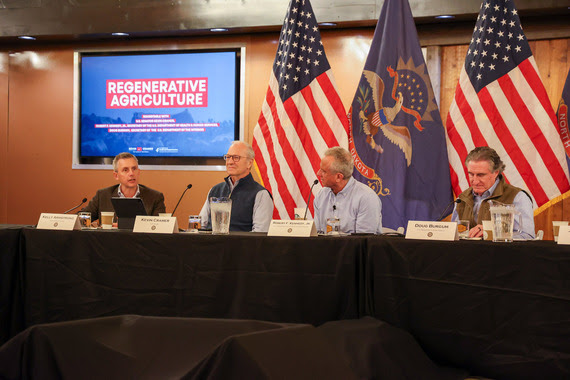
On a crisp morning in North Dakota, the air was thick with anticipation as farmers, ranchers, and community leaders gathered at Black Leg Ranch near McKenzie. The occasion was more than a routine visit; it was a pivotal moment where local commitment met national attention. U.S. Secretary of Health and Human Services Robert F. Kennedy Jr. arrived to discuss a topic that quietly underpins the future of American agriculture and public health: soil health. Gov. Kelly Armstrong, a steadfast advocate for sustainable farming, welcomed Kennedy with a firm handshake, emphasizing the vital link between healthy soil and a resilient food system.
The day’s focus centered on a roundtable discussion that brought together key stakeholders, including U.S. Sen. Kevin Cramer, Secretary of the Interior Doug Burgum, and U.S. Sen. John Hoeven. The conversation revolved around regenerative agriculture—a practice gaining momentum across the nation for its potential to restore degraded soils and boost farm productivity. Armstrong highlighted North Dakota’s pioneering efforts through the Governor’s Legacy Soil Health and Habitat Program, launched last January. This innovative, voluntary initiative incentivizes farmers to adopt practices like perennial grass cover, which enhances soil resilience, water retention, and wildlife habitat.
Funded with a $6.5 million pilot project covering over 9,000 acres in 2026, the program exemplifies a proactive approach to sustainable land management. Armstrong explained, “Our goal is to improve cropland productivity while safeguarding the environment, ensuring that future generations inherit fertile, thriving soils.” Kennedy’s visit underscored the federal government’s support for such efforts, emphasizing the importance of soil health in combating climate change and ensuring food security for Americans.
The enthusiasm for regenerative practices is palpable among North Dakota’s farming communities. Local farmers like Mark Jensen, who manages a 2,000-acre wheat operation near Bismarck, have already begun integrating cover crops into their rotation. Jensen noted, “The incentives from the state program make it easier to try new techniques that not only improve my soil but also help with water conservation during dry spells.” Jensen’s story is just one example of how local farmers are embracing new practices amidst the challenges of drought, market fluctuations, and aging infrastructure.
In North Dakota, agriculture isn’t just an industry; it’s a way of life. Many families have been farming the same land for generations, passing down knowledge and traditions. For these communities, the push toward regenerative agriculture is about more than environmental stewardship; it’s about economic survival and cultural preservation. The partnership between the North Dakota Game and Fish Department and soil conservation districts has created a network of support, educating farmers on sustainable practices and providing technical assistance. This collaborative effort is vital in a state where agriculture remains the backbone of the economy and a cornerstone of community life.
Looking ahead, Armstrong and his federal partners aim to expand the soil health initiative, potentially increasing acres under conservation practices and integrating more innovative techniques such as cover crop mixtures, reduced tillage, and soil microbiome enhancements. The success of the pilot project has sparked interest from other states, with North Dakota positioned as a leader in regenerative agriculture. Officials are exploring ways to leverage federal funding opportunities, including the upcoming USDA programs designed to support soil health and climate resilience.
The governor’s office emphasizes that these efforts align with broader goals of strengthening the local economy, preserving natural resources, and fostering a culture of stewardship rooted in faith and family values. Community engagement remains a priority, with plans to host workshops, farm tours, and educational campaigns aimed at demystifying regenerative practices and encouraging widespread adoption.
Community leaders are optimistic about the long-term benefits, not only for farmers and wildlife but for all citizens who rely on a stable, sustainable food supply. Armstrong stressed that “healthy soils are the foundation of strong families and thriving communities. When we invest in our land, we invest in our future.” As North Dakota continues to pioneer in soil health initiatives, the collaborative spirit demonstrated today offers a hopeful blueprint for nationwide adoption, ensuring that agriculture remains resilient amidst changing climate conditions and market demands.
Among those present was Sarah Thompson, a third-generation rancher from the Turtle Mountain Reservation. She shared her experience of transitioning to conservation grazing and cover cropping, which has helped her adapt to unpredictable weather patterns. “It’s about respecting the land and understanding that what we do today impacts our children’s future,” she said. Thompson’s story highlights the importance of community-driven change and the role of local leadership in fostering sustainable practices.
Similarly, young farmers like Jake Peterson, who recently took over his family’s farm near Fargo, see regenerative agriculture as a way to secure long-term prosperity. “This isn’t just about saving soil; it’s about building a legacy,” Peterson remarked. These personal narratives underscore the community’s collective commitment to environmental health and economic resilience.
North Dakota’s economy is deeply intertwined with agriculture, which accounts for a significant portion of the state’s employment and income. The success of soil health initiatives directly impacts local businesses, rural communities, and the state’s overall prosperity. Furthermore, the state’s vast prairies and farmland are vital habitats for migratory birds and native wildlife, making conservation efforts a matter of ecological importance as well.
The community’s response to Kennedy’s visit and the soil health program reflects a broader cultural ethos rooted in stewardship, faith, and a shared sense of responsibility. Many residents see sustainable farming as a moral obligation—an extension of their values to care for the land and future generations.
In the coming months, stakeholders will monitor the program’s progress, seeking ways to deepen federal-state partnerships and expand educational outreach. The North Dakota Department of Agriculture plans to host a series of workshops and field days to demonstrate successful practices and share lessons learned. Additionally, efforts are underway to develop new funding streams and policy incentives that encourage even more farmers to participate.
Local and state officials are also considering integrating soil health metrics into broader agricultural policies, tying conservation practices to access to grants and technical support. The goal is to create a sustainable, scalable model that can serve as a blueprint for other regions facing similar challenges.
The message is clear: sustainable soil management is more than an agricultural practice; it’s a moral imperative rooted in faith, community, and the American dream of prosperity built on strong families and a healthy land. As North Dakota leads the way, the hope is that these efforts will inspire nationwide change—ensuring that future generations inherit a resilient, productive landscape that supports both people and planet.
By Lillian Becker

By Emily Chang

By Jake Thompson
By Diane Nguyen